Made in Poland
Global Shipping

QS-BT1

Two-Channel Direct-Drive Belt Tensioner - 200 N per Channel

A belt tensioner that pulls the seat harness for braking and load cues, with no startup calibration. Quiet, 40 W on a household outlet, and layers onto any QS or PS platform.
1 390*

The list price is the full price of the standard unit shown here - net and ex-works. VAT is normally zero on export orders; options, delivery and any duties are confirmed at order.

Dual channel
Independent channels
RGB
Multifunctional lighting
120/230V AC, 1-phase
Power Supply
Belt Tensioner
Technology
Engineered Advantages

Why this model

Three engineering decisions that define this product.

The Harness Pull a Platform Cannot Give

Two direct-drive channels pull the racing harness at the chest and shoulders, up to 200 N each.

A motion platform paired with QS-BT1 adds directional upper-body pull over the cockpit cues, the load that reads as real cornering.

A platform on its own moves the cockpit yet never tugs the straps, leaving the upper body without lateral load.
Responsive From Power-On, No Calibration

The built-in force-control loop reads pulling force in real time rather than belt position, so it responds the moment power arrives.

Braking and cornering cues track telemetry within seconds, and a training center swaps drivers between runs with no operator setup.

Position-sensing tensioners on the market re-zero at every power-up - the operator recalibrates before the first run and after each driver swap. The QS-BT1's force control needs none of that.

Quiet, Runs Off a Wall Outlet

The unit runs quiet and draws 40 W from a household outlet over a single USB link to the PC.

That suits shared training rooms, and one tensioner layers on QS or PS platforms or runs standalone in a home rig.

Louder, higher-power haptics instead force soundproofing work or shift-end shutdowns once the room fills.

Specifications

Technical Data

Main Dimensions
Total Width138mm
Total Length561mm
Height96mm
Product Weight13kg
Performance
Vibration Range0-100Hz
Channels2independent
InterfaceUSB
Noise Level42-48 dB (whisper quiet)
Power Requirements
System Power120/230V AC, 1-phase
Pulling Force200 N per channel
Rated Power480 W
Power draw120 V230 V
Average Power0.11kVA0.09kVA
Peak Power0.2kVA0.15kVA
Average Current1A1A
Peak Current3A2A
Avg Power - Stress Test0.06kW0.04kW
Avg Power - Typical Game0.05kW0.04kW
Peak values are not reached continuously. Tech Sheet
Software Stack

Native SDK Integration.

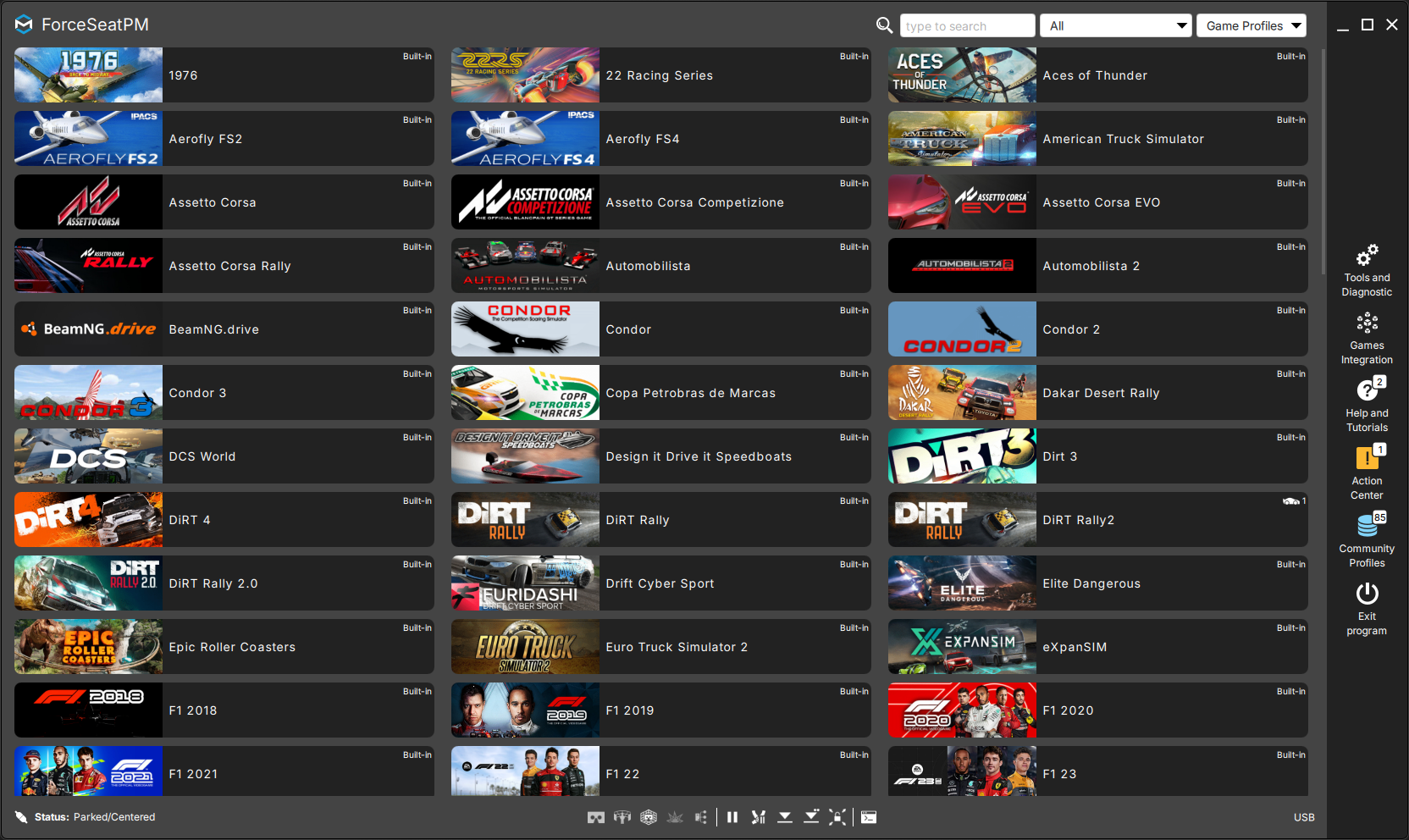
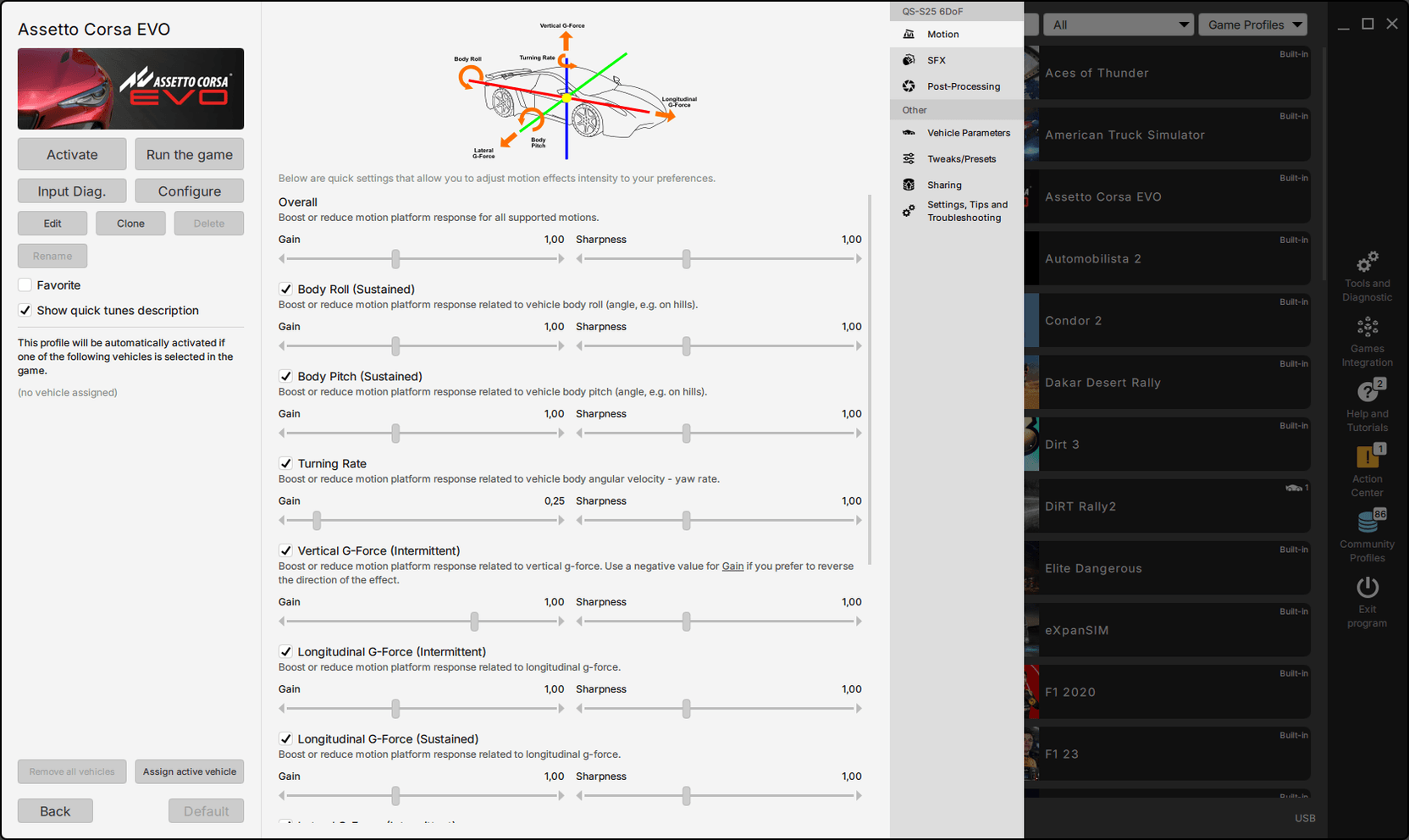
Powered by ForceSeatPM, with 154+ commercial and entertainment simulators supported out of the box. The ForceSeatMI license, held per device with the key on the PC, adds native SDK access for custom logic in C++, C#, Python, Unity and UE5.

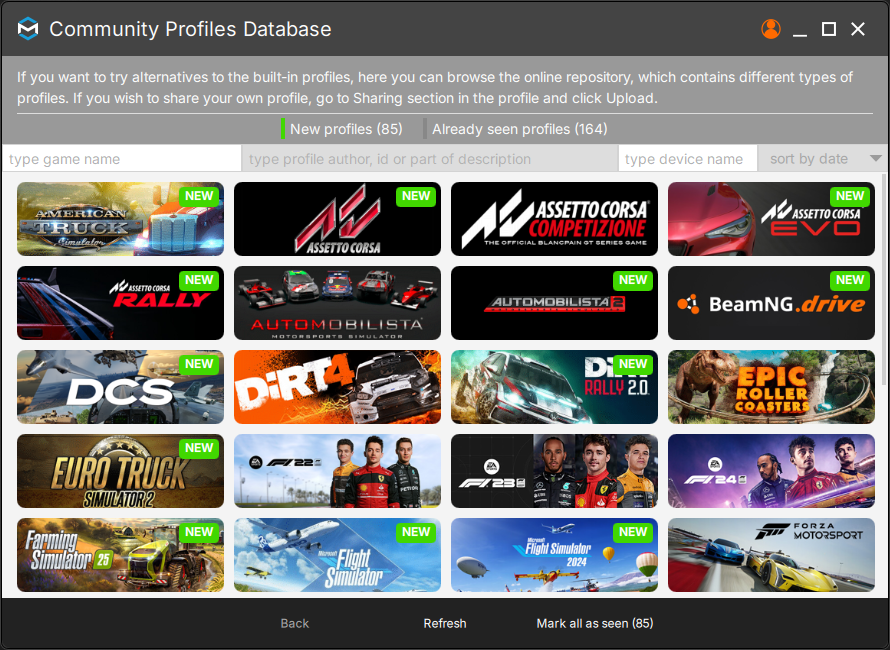
Main DashboardGame ProfilesCloud DatabaseDiagnostics
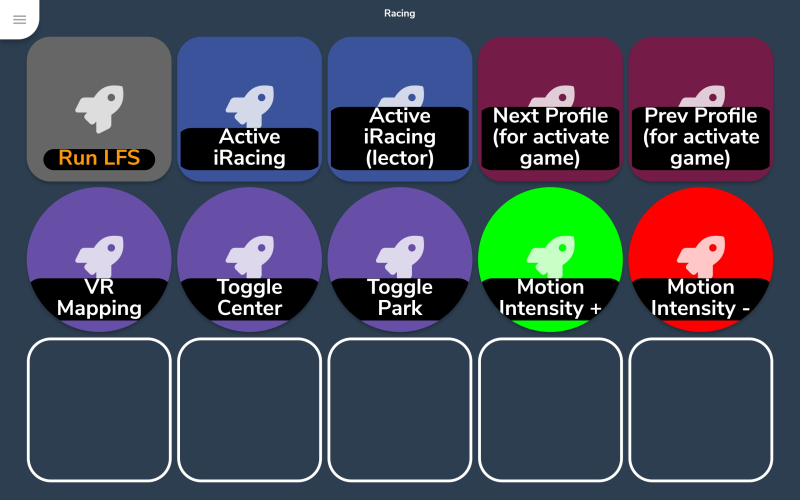
DashboardsDashboards
VR HeadWayVR HeadWay
Control ProtocolControl Protocol
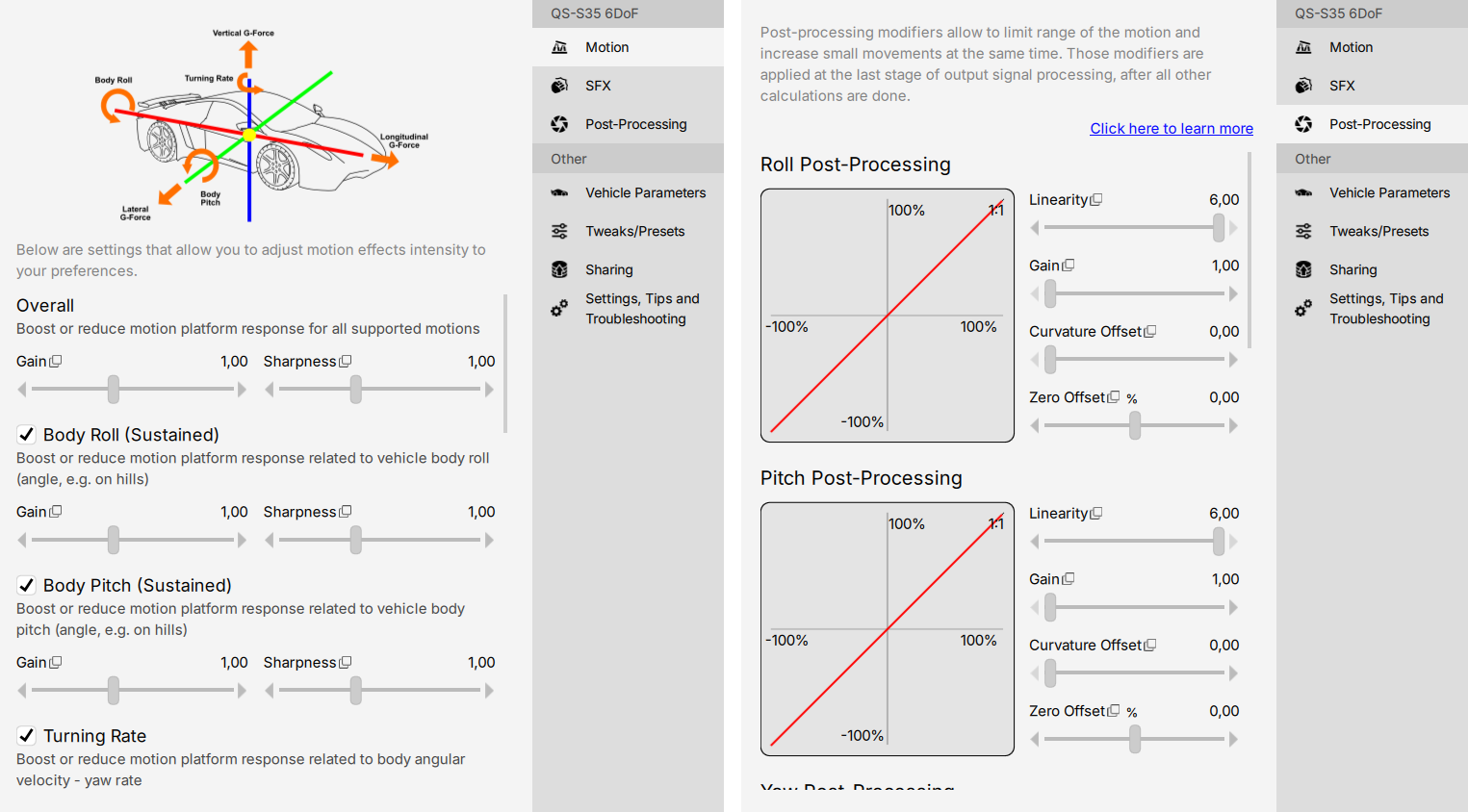
Post ProcessingPost Processing
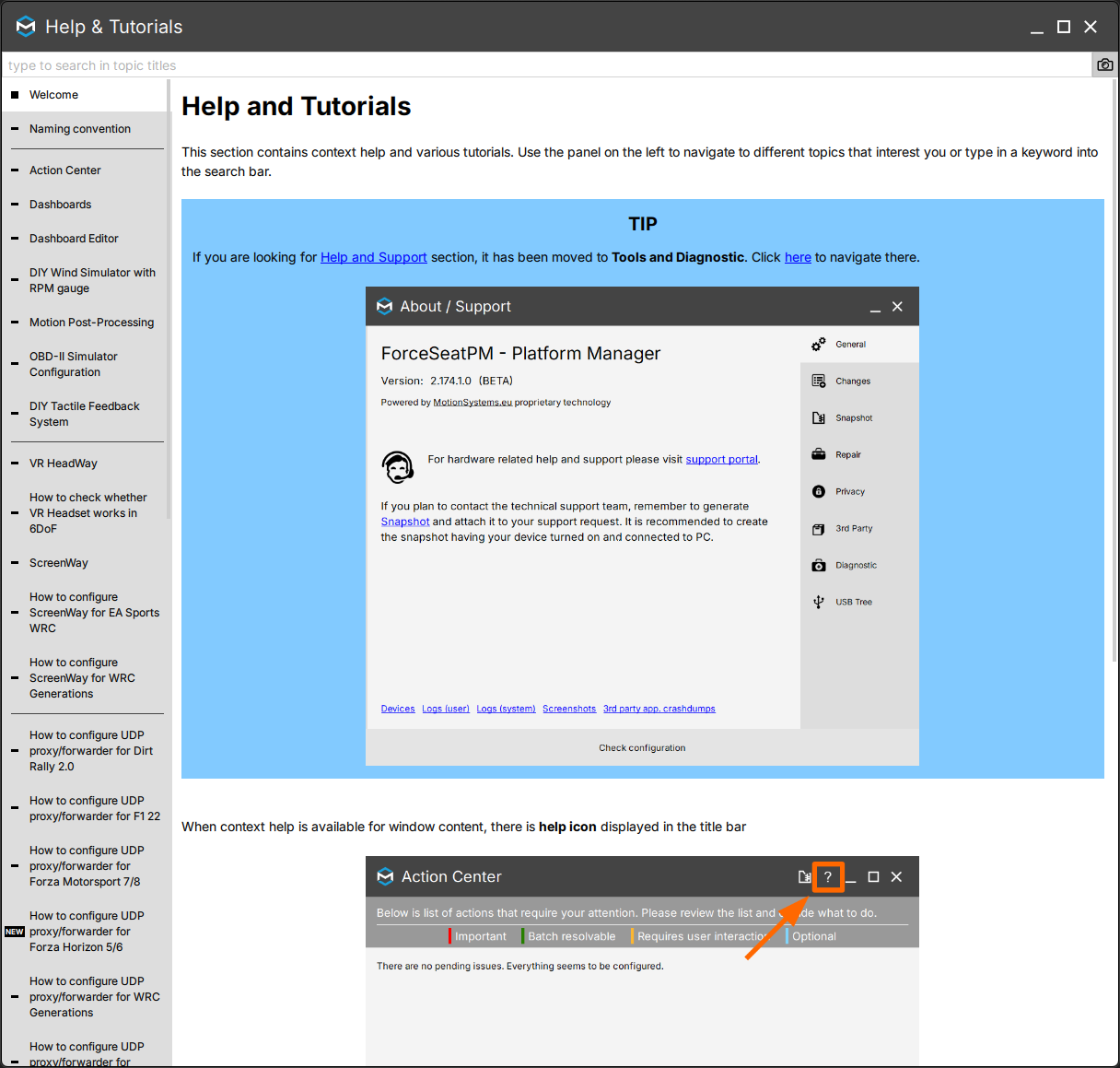
Every ForceSeatPM feature and tutorial is documented in the Knowledge Hub.Browse the tutorials →
Package & Options

What's in the Box.

Hardware, software and licenses included with every unit - plus the optional add-ons available on this model.

Hardware

  • QS-BT1 Unit
    A 13 kg dual-channel belt tensioner - engine, shift, corner and crash cues up to ~200 N per channel. Standalone or with a rig.
  • External Power Supply
    A 2.8 kg external supply running the tensioner from a wall outlet - fully self-contained.
  • USB Cable
    A 3 m USB lead to a Windows PC - the tensioner talks to the PC directly, not over M-BUS.
  • Motion-Lock Cable + Jumper
    A 2 m Motion-Lock lead plus jumper, so the unit joins a rig's lock circuit or runs standalone.
  • Universal Mounting Adapter
    A universal bracket to fix the tensioner to most rigs - no fabrication.
  • Low-Friction Belt Inserts
    Two low-friction inserts for a crisp pull without chafing the belt, plus two belt buckle attachments. The seat harness is supplied by the user.

Software & Licenses

  • ForceSeatPM
    Auto-detects 154+ supported games with pre-tuned profiles. Included free, with free software updates.
  • Sim Profiles
    Pre-tuned motion profiles for the popular sims and games, so the first session already feels right.
  • Effect Tabs
    Belt-tension effects - engine vibration, shift and corner cues, and a hard crash pull. Pre-tuned for popular titles.
  • Action Center
    The diagnostics and setup console - check and tune the channels before a session.
  • Docs & References
    Technical docs and mounting references for clean mounting to an existing rig. Complete CE-marked equipment (EMC 2014/30/EU) - tested to run without disturbing nearby VR tracking, radio or wireless links.
  • 12-Mo Warranty
    12-month commercial warranty, extendable on request; retail and consumer get the standard 24 months. Free software updates throughout.

Optional Hardware

  • Motion-Lock
    A hardware stop switch in place of the bundled jumper - press it and motion stops at once. A status LED flashes while active, steady when stopped.
    80

Optional Software and Services

  • ForceSeatMI - Motion SDK
    Motion SDK to drive the device from custom software, on top of ForceSeatPM. Licensed per device, with the key stored on the PC.
    850
  • ForceSeatDI - Direct Interface SDK
    Low-level SDK driving the device hardware directly on Windows, Linux or Raspberry Pi. Per device.
    2 750
  • Remote Training (online)
    Six-hour online session - setup, effect tuning, operation and troubleshooting. Per session.
    1 800
  • More Options
    On-site installation, extended warranty and bespoke development - talk to the Motion Systems team to tailor it.
    On request
Full immersion experience

Pairs with the entire Qubic System lineup.

A universal aluminum-profile bracket ships in the box, so the QS-BT1 bolts onto every Qubic System rig - and most third-party cockpits too.

Plus most aluminum-profile cockpits - universal adapter included.

Also fits simulators built on Motion Systems TL (Linear) and TM (Low-Profile) platforms.

QS-BT1 Seat Belt Tensioner
Deep Dive

How It Works.

QS-BT1 · Belt Tensioner

Two direct-drive motors, one per belt, run the racing harness through low-friction rollers. There is no gearbox between motor and belt, so each channel applies pull straight to the shoulder strap, and the two channels are fully independent - in a right-hand corner the left belt pulls harder.

This turns lateral and braking telemetry into directional harness force on the upper body. The built-in force-control loop measures pulling force in real time rather than belt position, so the unit is responsive from power-on with no startup calibration. The whole assembly draws 40 W on a household outlet over a single USB link to the PC.

QS-BT1 is a belt tensioner, not a motion platform, so it has no parking sequence of its own. On a Motion-Lock interlink it releases harness tension with the host platform, and pulling force eases to slack when power is removed.

Comparison

Compare Lineup

Side-by-side technical data. Toggle Differences only to highlight the higher values.

Target
QS-BT1
Compare with
QS-220
Specifications
Degrees of Freedom / Haptic
HapticQS-BT1
3DOFQS-220
Max Payload
N/AQS-BT1
350 kg (Heavy Duty mode)QS-220
Belt Pulling Force
200 N per channelQS-BT1
N/AQS-220
Power Supply
120/230V AC, 1-phaseQS-BT1
120/230V AC, 1-phaseQS-220
Core Technology
Belt TensionerQS-BT1
Linear ActuatorQS-220
Frequently Asked

Questions the team gets first.

Setup, supported titles, latency and software integration - answered up front, ahead of the first call.

Qubic System sets up in hours: the platform and ForceSeatPM auto-detect supported simulator titles with pre-tuned profiles, no code required. The customer supplies the PC, title and controls; the ForceSeat SDK covers custom integration.

ForceSeatPM auto-detects a wide range of supported simulator titles with pre-tuned profiles, and the ForceSeat SDK and API cover custom telemetry for bespoke integrations.

Yes. Qubic System accepts add-ons such as the QS-BT1 seat-belt tensioner and the QS-CH2 module, so a rig can extend the effects and axes it delivers over time.

The ForceSeat SDK streams telemetry in C, C++, C# and Python with Unity and Unreal Engine plugins, so integration code can be written and validated ahead of delivery.

Qubic System hardware is often in stock and typically ships within 1-3 weeks, with the exact date confirmed at order. Integration work does not have to wait for delivery - the ForceSeat SDK lets custom development start ahead of the hardware.

Every platform ships with a warranty, diagnostic support and access to spare parts, with the exact term listed in the box above. Extended service options are available for fleet and training deployments.

Integrate the QS-BT1 into the project.

One team scopes the build, carries it through integration and commissioning - with integrator partners where a full simulator is the goal - and stays involved once the rig runs in the field.

What happens next?

< 1 business day

Confirmation & initial review

A dedicated account manager reads the message directly.

2-3 business days

Technical assessment

The team analyzes feasibility and prepares questions or an initial concept.

5-10 business days

Proposal delivery

Detailed technical proposal with a platform recommendation, transparent pricing, lead time, and integration timeline.

Ongoing

Team support

Ongoing support from the team behind the recommended platform - for the life of the project.